

For a plumbing service business, inventory tracking often comes down to a specific question: which van has the right cartridge, and is it still there? A parts catalog cannot answer that. Plumbing inventory management software needs inventory data showing the quantity at each stock location and a record of what happened when a part was received, moved, used, or returned.
This guide is for plumbing business owners and managers comparing systems for residential repairs, installations, light commercial service, and larger commercial projects. Effective inventory management is crucial for plumbing businesses to reduce costs, prevent stockouts, and improve job scheduling reliability.
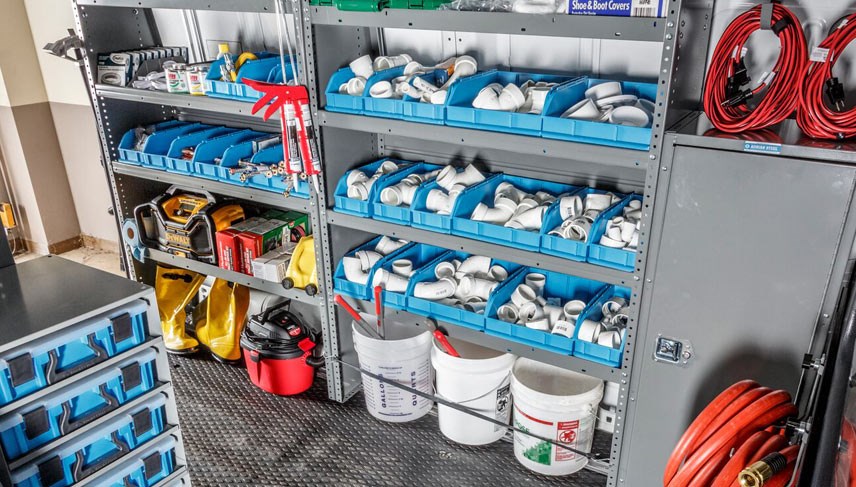 FieldPulse is my first choice for a growing residential plumbing company buying its service and inventory software together. ServiceTitan deserves a closer look when a larger service operation needs purchasing staff, warehouse controls, and formal requisitions. For commercial plumbing contractors, BuildOps makes the stronger case around reserved materials and project costs.
For an existing Jobber or Housecall Pro customer, choosing plumbing inventory software means deciding whether adding Ply solves the stock problem without replacing the service platform. This guide compares those routes, including the extra systems and costs involved.
The stock discussed here is material for sale or installation: fittings, pipe, repair parts, pumps, and water heaters. For installed equipment and warranty histories, use our plumbing customer asset management guide. To track tools such as drain cameras and other reusable company equipment, see the plumbing equipment tracking comparison. GPS tracking can locate a vehicle; the stock ledger records the parts it carries.
Quick Verdict
FieldPulse is the best overall fit for growing residential plumbing teams. Its base subscription includes the inventory management functions that matter when the office replenishes truck stock and plumbers record material use at the job site. It also covers straightforward light commercial work.
ServiceTitan fits a service company that already needs formal stock procedures. The value is in assigning responsibility for purchasing, receiving, and requisitions across a larger organization. Budget for the setup and the people who will run those processes.
BuildOps is the commercial project choice. Plumbers drawing repair parts from warehouse stock have different needs from a project team reserving materials for an installation phase. BuildOps connects that project purchasing decision with stock and job costs.
QuoteIQ offers native inventory on Elite and Max. Check the subscription tier and demonstrate the deduction workflow before buying. Our wider app tests raised field-usability concerns, described below.
Housecall Pro and Jobber are add-on decisions for stock control. Both can work with Ply. Neither platform’s ordinary material catalog supplies the truck and warehouse ledger by itself.
FieldEdge needs a configuration-specific assessment. Its Elite warehouse option depends on a particular QuickBooks Desktop setup. The alternative Ply connection has its own work-order and purchasing boundaries.
Plumbing Inventory Software Compared
The pricing data below retains the published, observed, or reported basis from our October 2026 review. These figures describe different packages and billing terms. A per-user service subscription and a location-priced stock application are separate costs.
| Platform | Plumbing buying decision | Stock arrangement | Recorded pricing basis |
|---|---|---|---|
| FieldPulse | Buy service software and van inventory together | Native inventory in the base subscription | Observed about $99 per user monthly, before discounts |
| ServiceTitan | Give warehouse and purchasing staff formal controls | Inventory and Purchasing modules | Reported $250–$500 per technician monthly; implementation extra |
| BuildOps | Reserve plumbing materials for commercial project work | Native stock, purchasing, and project costs | Custom quote; reported about $299+ per user monthly |
| QuoteIQ | Use native stock within a broader service app | Inventory requires Elite or Max | Elite: $299.99 monthly for ten users |
| Housecall Pro | Keep the service workflow and add a stock ledger | Material usage records plus separate Ply | Observed plumbing signup: $79 monthly; Ply additional |
| Jobber | Keep simple quoting and jobs while adding stock control | Products & Services catalog plus separate Ply | Connect, one user: $99 monthly on annual billing or $139 on monthly billing; Ply additional |
| FieldEdge | Retain an established accounting-led operation | Elite with QBD Enterprise Advanced Inventory, or Ply | Reported $100–$125 per user monthly and $500–$2,000 setup; external software additional |
How We Tested
Testing at a glance
- Review period
- October 2026
- Devices
- Desktop and iPhone
- Evidence
- Trial and paid account observations; vendor inventory and integration documentation.
- Focus
- Managing plumbing stock locations, receipts, transfers, purchasing, counts, and job usage, including when each action changes the inventory ledger.
- Scope / limits
- Plumbing task examples are buyer demo checks.
This October 2026 comparison draws on the editorial team’s desktop and iPhone observations from trial and paid accounts, together with vendor inventory and integration documentation. The products reviewed were FieldPulse, ServiceTitan, BuildOps, QuoteIQ, Housecall Pro, Jobber, and FieldEdge. We assessed fit for plumbing businesses ranging from solo operators to organizations with roughly 50 technicians.
The review separates a feature documented by the vendor from an observation made in our accounts. Its scope includes stock locations and units, receipts and transfers, purchasing, counts, job usage, and the point at which an action changes the ledger. Our editorial methodology explains the broader review process.
The plumbing task examples below are buyer demo checks. They help a business assess the proposed setup using the parts and stock locations its plumbers work with.
What Is Plumbing Inventory Management Software?
A plumbing inventory system needs to distinguish the repair part a plumber can use from the stock the company happens to own. A cartridge on another van, a water heater reserved for an installation, and pipe still on a supplier order have different availability.
Start with the item record. To track parts such as PVC fittings, plumbing contractors need distinct item records for each size, material, and connection type. Manufacturer-specific cartridge identifiers matter when several parts look similar. A generic fitting entry loses the detail needed to buy and replenish the correct product.
The stock unit also needs care. Pipe can be bought in lengths or coils and used by the foot. A box containing 25 elbows needs a defined conversion to the individual pieces used at the job site. Decide how the team will record an opened package before importing the catalog.
Keep the stock ledger separate from the purpose of other records. The pricebook supplies the customer charge. Inventory supplies the available quantity and location. Once a water heater has been installed, its warranty and service history belong with the customer’s asset record. A drain camera stays company equipment after a plumber takes it to a job.
Inventory Control Checks for Plumbing Contractors
Use the following checks in a vendor demonstration to see how the proposed setup would track inventory across multiple locations. They are practical examples drawn from the stock problems covered in this guide, rather than new measured results.
| Demo check | Ask to see | Why it affects the purchase |
|---|---|---|
| Find a manufacturer-specific cartridge on another van | Its item identity, available quantity, and source location; then record the transfer | A search result is useful only if the next plumber can rely on the balance |
| Receive a box of elbows and record individual fittings used | The purchase unit, stock unit, receipt, and job deduction | Packaging conversions can make a well-organized catalog produce incorrect quantities |
| Hold a water heater for an upcoming job | On-hand stock, the allocation to the job, and available stock for other work | The office needs to avoid promising the same equipment to another customer |
| Return unused material after a job | The destination van or warehouse and the resulting quantity correction | Buying replacement stock is unnecessary if a usable return was never recorded |
| Use a part before the customer pays | The exact event that deducts stock, including any earlier-deduction control | An unpaid invoice can otherwise leave the displayed availability ahead of physical stock |
| Count a van with a discrepancy | The physical count, adjustment permissions, and transaction history | A manager needs enough detail to investigate missed transfers or unit errors |
FieldPulse: Best Overall for Growing Residential Plumbing Businesses
FieldPulse gives a residential plumbing business a connected starting point for residential service work. Inventory management is part of the base subscription, alongside jobs, estimates, invoices, purchasing, and customer assets. That is a useful arrangement for a company that wants to replenish vans without administering another stock application.
Its Inventory Hubs keep quantities for warehouse locations and service trucks. The office can set different stock levels for a service van and the main store. A transfer records the change of location when a plumber takes a cartridge from another vehicle.
Mobile Access and Inventory Data
FieldPulse supports purchase orders, material lists, barcode scanning, and counts. It can keep the recorded count separate from the adjustment, giving a manager a chance to investigate the difference. A company with multiple trucks still has to establish clear item names and stock units, then decide who may correct a balance.
The deduction controls let the business use completed Material Lists or finalized Invoices as the stock event. Linked records coordinate that quantity so it is not deducted again by another linked action. Configuration is done on the web; supported record controls and counting are also available on mobile.
For installable equipment, the serialized workflow can carry the chosen unit’s serial number to the invoice and create a customer asset. A water heater can therefore move from saleable stock into the customer’s service history without losing its identity.
Our observed price was about $99 per user monthly before discounts. Optional services, including Sales Suite and Custom Forms, can alter the package. FieldPulse is my preferred starting point for a growing residential plumbing business, including light commercial work. A company with more demanding commercial procurement should also assess BuildOps.
ServiceTitan: Best for Enterprise Inventory Controls
A larger plumbing organization may have warehouse employees receiving deliveries, a purchasing manager placing orders, and technicians requesting stock for sold work. ServiceTitan has a stronger case when those responsibilities need formal records and permissions.
The documented Inventory module works with Purchasing. Its functions include replenishment and stock transfers, adjustments, job transfers, install requisitions, and serialized equipment. Relevant pricebook items must have inventory tracking enabled. Importing material names is only part of the setup.
ServiceTitan’s Inventory Mobile App supports PO receiving, transfers, and cycle counts. Scanning depends on the barcode being assigned to the correct item. A replenishment request can involve warehouse stock or supplier purchasing; the receiving and job-use records need to account for that material afterward.
That depth brings administrative work. Opening balances and locations have to agree with physical stock; permissions and accounting rules also need owners. A plumbing shop whose main problem is keeping repair fittings in truck stock may find FieldPulse more proportionate.
The review recorded reported prices of $250–$500 per technician monthly, with implementation figures ranging from $5,000 to $50,000 or more. For enterprise pricing, the total also depends on modules, migration, and data cleanup.
BuildOps: Best for Complex Commercial Plumbing Inventory
Commercial plumbing changes the stock question. A contractor needs to know which material is available for service, which is reserved for project work, and which purchase commitments have yet to arrive. BuildOps is the strongest fit in this comparison when commercial projects drive that decision.
BuildOps purchasing and inventory includes on-hand and reserved quantities, min/max settings, and visibility across warehouses, trucks, and jobsites. Mobile users can check vehicle stock, log parts, and create purchase orders.
Its receipt and PO image capture helps populate purchasing information for review. Recorded parts feed the invoice and job costing reports. The broader commercial workflow can connect a purchase, its receipt, and the vendor bill with the work that incurred the cost.
For plumbing project work, assigning stock to an installation phase affects what the company can offer another job. The stock record and project cost depend on accurate receipts and usage entries.
BuildOps quotes each configuration. Reported pricing in the review was about $299 or more per user monthly, with modules, user count, migration, and implementation affecting the purchase. A residential repair business is unlikely to need all that commercial administration; the stronger value is in using project delivery and procurement together.
QuoteIQ: Native Inventory on Elite and Max
QuoteIQ’s inventory module is available on Elite and Max. Its inventory documentation describes product quantities at warehouse, truck, or employee locations, supplier records, thresholds, purchase orders, and a transaction history. It records receipts and issues as well as returns, losses, damage, and adjustments.
In QuoteIQ’s linked-materials workflow, stock normally deducts when the invoice is paid. A deposit or partial payment does not settle that invoice; the payment workflow also offers an earlier deduction option. That earlier control matters when a fitting leaves the van while the balance is still outstanding.
Stock-linked materials take their cost from the inventory product. Lower plans can still use material lines for documents, but they lack the same stock ledger. QuoteIQ also lacks a dedicated customer asset workflow; notes and forms serve that separate purpose.
Elite was $299.99 monthly for ten users. Max includes inventory too. Pro was $199.99 for four users and did not include the same module.
Our broader estimating tests recorded frequent loading delays of 6–10 seconds and offline errors. Those observations concern estimating; we did not establish that inventory transactions failed. They nevertheless affect my choice of an app that a plumber must use throughout a service day.
QuoteIQ describes AI access to operating records. The review does not establish autonomous demand forecasting or purchasing. A plumbing buyer should demonstrate the stock transaction and replenishment process rather than infer it from the AI feature description.
Housecall Pro: Material Usage Tracking With External Inventory
Verdict: Housecall Pro is useful for a residential team that values its simple job workflow and is willing to add a stock system such as Ply. It does not have a native inventory ledger for truck or warehouse quantities.
Main trade-off: The business pays for and maintains a separate inventory application. Native usage information and a saved Price Book do not remove that requirement.
Native Material Records vs. Ply Stock Control
Material Inventory Detail Tracking records source, vendor, and purchase status on material lines or internal job inputs. Material usage reporting can show what was used across jobs and employees.
Those records can explain which job used a faucet cartridge. They cannot, by themselves, answer how many remain in each vehicle or automatically reorder low warehouse quantities.
The Ply integration adds a separate location-stock and purchasing workflow, including allocations, transfers, scanning, and replenishment. Both accounts are required, and the team needs consistent product identities and source locations.
Price and the Industry Upcharge
In our October 2026 signup comparison, Housecall Pro displayed $59 per month for handyman and $79 for plumbing, with no identifiable difference in product configuration or functionality. That industry-based upcharge did not supply native inventory management.
Update Oct. 26, 2026: Purchase Orders are now available only to the HVAC, Electrical, and Plumbing packages.
Ply is additional. As a concrete cost reference, the Starter quote I obtained for a clean-start HVAC company with one warehouse and three trucks was $280 per month. It illustrates a four-location inventory configuration; it is not a separate observed quote for every trade.
For an established Housecall Pro team, adding inventory may be sensible. For a new plumbing buyer wanting native stock and broader flexibility, FieldPulse is the stronger starting point.
Residential contractors may prefer keeping their familiar customer relationship management and job screens while adding stock tracking. Office staff then need a clear division between the HCP job record and the Ply ledger. Customer history explains the work; inventory tracking explains the material quantity and location.
Standalone inventory apps can add depth to a plumbing business, but the combined cost belongs in the purchase decision. For service vans visiting several homes daily, mobile access to current truck stock can matter more than an impressive warehouse dashboard. The plumbing business should evaluate that actual field handoff.
Jobber: Simple Service Software With a Separate Stock System
Jobber suits a small plumbing business that values straightforward quotes, jobs, and billing. Its Products & Services catalog reuses line items on those documents. For stock quantities and movements, the company needs a separate system.
The Jobber–Ply synchronization guide explains how recognized products and kits enter Jobber job lines. Custom fields can expose stock availability. The item entered by the plumber needs to be the linked product: a one-off description typed into a Jobber line does not become a recognized Ply stock item.
Some images, categories, service records, and PO details do not pass between the applications as equivalent records. A purchase-order reference may be written in job notes without supplying a full synchronized PO workflow.
The review recorded standard Connect pricing of $99 monthly on annual billing or $139 on monthly billing for a user. The five-user option was $149 or $199 respectively. Other Jobber tiers have different features, and Ply is an additional cost.
Adding stock control can make sense for an existing Jobber customer. Include the cost of the separate application and the work of maintaining linked products in that decision. In the demo, change a linked job line and check whether the same data must be entered again in Ply.
FieldEdge: Inventory Through Accounting or Ply
FieldEdge is worth considering when an established plumbing fleet wants to keep its familiar service and accounting arrangement. A buyer starting from scratch needs to understand the external stock system before comparing the service subscription price.
The documented Elite Warehouse Inventory route requires QuickBooks Desktop Enterprise with Advanced Inventory. A QuickBooks integration should not be taken as evidence that the same warehouse functionality is included.
There is also a FieldEdge-to-Ply work-order connection. In that workflow, a plumber enters material use in FieldEdge and the entry flows to Ply. The selected warehouse identifies the stock location. Catalog and location synchronization have specific directions and setup requirements.
Purchasing and part requests sit outside that particular work-order connection. Ply having purchase orders does not establish that the entire purchasing process is synchronized inside FieldEdge. Ask who will enter an order, receive the goods, and correct an exception in the proposed configuration.
Reported FieldEdge prices in our review were $100–$125 per user monthly, plus setup of $500–$2,000. The required QuickBooks package or Ply subscription adds to that total.
How to Manage Plumbing Inventory and Stock Levels
Begin with the parts that the plumbing team actually keeps on service trucks and in other storage locations. Separate similar cartridges and fittings before loading opening quantities. Establish a stock unit for pipe and packaged materials, and count what is physically present in each location.
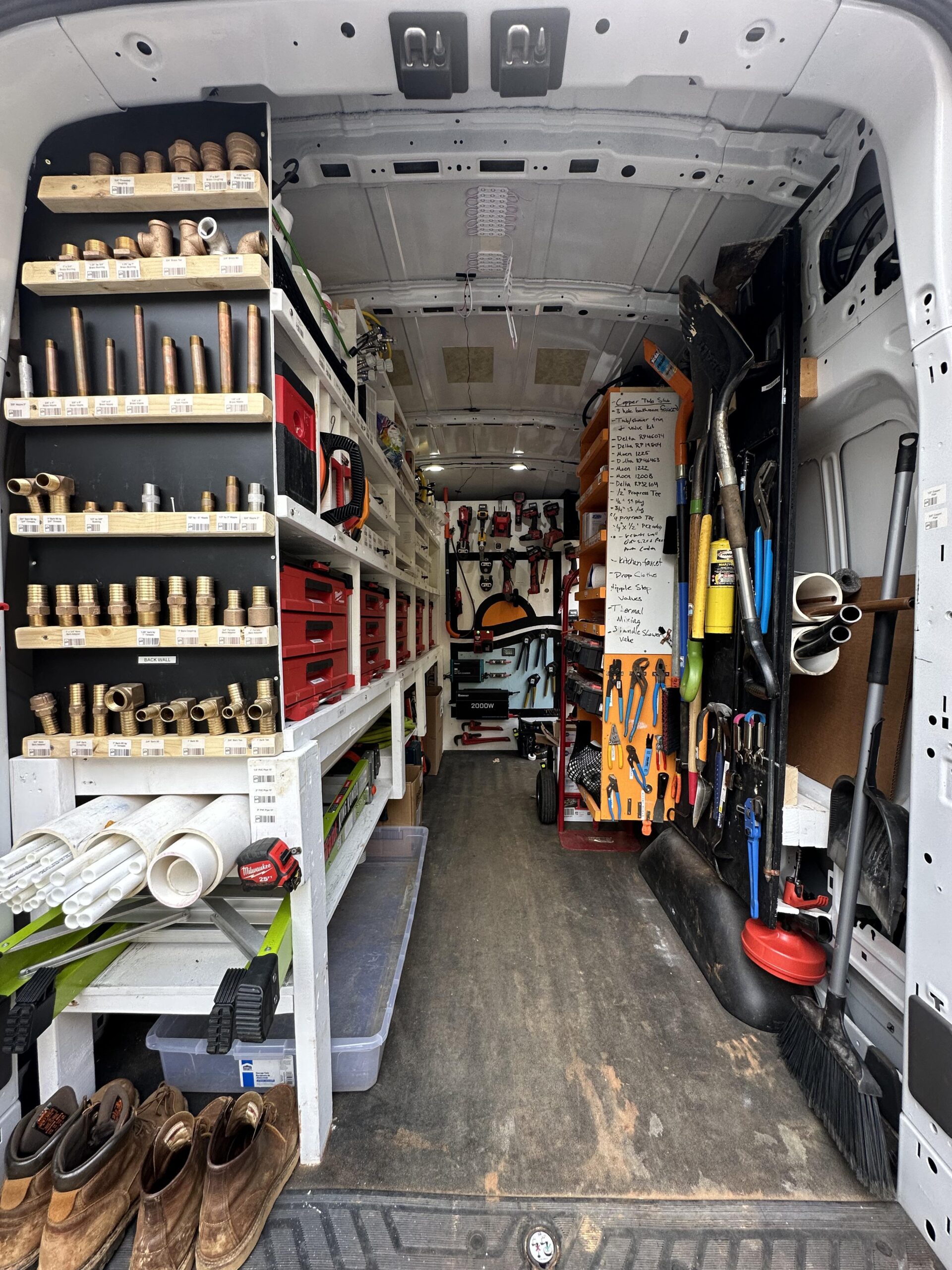
Manage Inventory With Multi-Location Tracking
The office manager and plumbing team should agree on the transactions staff must record. A supplier order tells the office that stock is expected. Receiving confirms what arrived. A transfer identifies which van took it, and job usage explains why it left that van. Usable returns need a destination and a quantity so they become available again.
Low Stock Alerts and Truck Stock
For replenishment, choose truck stock levels for the job type handled by each service team. Low stock alerts need a person or purchasing process to act on them. Check whether the system suggests an order, creates one, requires approval, or only flags the item. Confirm receipt after the supply house trip.
Physical counts help find packaging mistakes, duplicate item records, missed transfers, and unrecorded returns. Investigate those causes before treating every discrepancy as loss. Keep enough transaction detail to understand recurring differences.
Inventory Software Costs for a Plumbing Business
Ply prices by stock locations and includes unlimited users. Its current pricing describes hands-on onboarding, importing, location setup, and training; higher packages add supplier and purchasing controls. Supplier connections, PO approval, and matching functions should be priced as part of the required package.
The $280 Starter quote cited above covered a particular HVAC setup. It cannot establish a universal truck price or the cost of every plumbing operation. When comparing plumbing inventory software for Jobber, Housecall Pro, or FieldEdge, include the cost of the service platform and the inventory tools it requires.
Job Costing and Accounting Software
For job costing, record the item, quantity, source location, and unit cost against the plumbing job. That inventory usage supplies the material costs for the job record. In a demonstration, use a corrected job entry to check any accounting sync: inspect the cost data in the accounting software and which corrections stay in the inventory system. Buying excess stock also affects cash flow while parts wait on a shelf.
Frequently asked questions
Can plumbing inventory software distinguish similar cartridges and fittings?
It can when the catalog gives each product a clear identity. Specify the manufacturer reference and the relevant fitting size, material, or connection. Ask a plumber to select the exact part during the demo, then inspect the stock record created by its use.
Can plumbers check and move stock between service vans?
FieldPulse, ServiceTitan, BuildOps, QuoteIQ, and Ply support stock locations suitable for vehicles. Mobile actions differ by product and configuration. Have the vendor show both the source van and the receiving van after a transfer, including how a correction is entered.
Does a barcode scan reduce the quantity?
The scan identifies the product. The action attached to it determines whether the system records a receipt, transfer, count, or job use. Ask the vendor to show the resulting balance and transaction history for the mobile action your plumbers will use.
Will a Price Book tell the dispatcher what is on a van?
A saved catalog item supplies a reusable description or price. For Housecall Pro and Jobber, the business needs external stock management to maintain location quantities. Check where the dispatcher will read availability and where plumbers must record material use.
What if material is installed before the invoice is paid?
Choose and document the deduction event. FieldPulse offers Material List or Invoice-based controls; QuoteIQ’s linked stock normally deducts at paid invoice, with an earlier option available in its payment workflow. Demonstrate the unpaid-job case before settling on a process.
Can a water heater become a customer asset after installation?
FieldPulse can take a serialized inventory unit through the invoice into a customer asset. Verify the serial selected for the sale and the installed unit’s record. That asset history is where the plumbing team should find its warranty and later service information.

Olivia Evans
Olivia has more than 10 years of experience researching field-service software for HVAC and other service businesses and improving their marketing and operations. She conducts hands-on workflow tests, documents findings with screenshots and notes, and checks product claims against official vendor documentation.
Author profile →How we test →