
FieldPulse is my leading choice for residential electrical contractors who need detailed proposals alongside day-to-day job management. BuildOps is the stronger shortlist candidate for commercial electrical projects, while ServiceTitan suits larger service businesses that need to standardize pricing and sales across multiple crews or branches. Jobber is a simpler option for electricians sending straightforward installation and repair quotes.
The best electrical proposal software makes the boundaries of a job clear. A customer should understand whether a panel quote includes a service upgrade, who supplies the light fixtures, and what assumptions sit behind an E
V-charger installation price. A commercial buyer also needs to distinguish the base bid from alternatives, allowances, and later revisions.
This guide compares seven field service platforms with proposal capabilities. The focus is electrical service work, panel replacements, EV charging, lighting, rewiring, and commercial installations. Recommendations consider both the customer document and what happens to the agreed scope after acceptance.
Updated October 20, 2026. Prices are in US dollars. Published prices and plan requirements are linked in the relevant sections.
Which Electrical Proposal Software Fits Your Business?
Choose a shortlist around the way your company wins work. An electrician quoting directly to a homeowner has different presentation needs from an estimator submitting a bid to a general contractor.
| Platform | My recommended buying situation | Electrical-specific reason to consider it | Main buying caution |
|---|---|---|---|
| FieldPulse | Residential electrical teams handling service calls and larger upgrades | Flexible proposal content and options, plus a documented City Electric Supply integration | The full presentation and pricebook setup requires paid Sales Suite features |
| BuildOps | Commercial electrical contractors managing projects and service | Quoted scope can connect to project delivery, approvals, and job finances | Choose it for the commercial workflow; a residential quoting need alone may not justify the setup |
| ServiceTitan | Larger electrical service organizations | Centralized pricing and reusable proposal options for technicians | Templates, permissions, and pricebooks require continuing administration |
| Jobber | Small electrical shops with straightforward offers | Clear quotes with photos, reusable templates, and selectable extras | Full document customization uses the web; package choices need careful presentation |
| Housecall Pro | Residential electricians selling repeatable service packages | Electrical package with a Sales Proposal Tool on qualifying tiers | Check the exact package and the difference between mobile and desktop editing |
| QuoteIQ | Small teams wanting rich proposal content and mobile AI | Branded documents, estimate options, and AI-assisted drafting | Reliability issues in our platform tests and credit charges on lower plans |
| FieldEdge | Service shops prioritizing consistent repair prices | Managed flat-rate pricing with electrical pricebook content | Less flexible for custom project presentations in our review |
These recommendations cover the platforms evaluated in our broader software review. They are not an exhaustive ranking of dedicated electrical estimating, takeoff, or engineering applications.
Proposal Software, Estimating, and Takeoff Solve Different Problems
Electrical proposal software prepares the offer your customer receives: the scope, price, choices, conditions, and approval process. It may sit inside the same platform as estimating, but the two functions deserve separate evaluation.
| Function | Main question it answers | Example |
|---|---|---|
| Takeoff | What quantities does the project require? | Count devices and measure cable or conduit routes from drawings |
| Estimating | What will the work cost, and what should we charge? | Apply labor, material prices, equipment costs, overhead, and markup |
| Proposal creation | What exactly are we offering the customer? | Present the agreed scope, total price, alternatives, exclusions, and acceptance terms |
For a small service business, saved services and an estimate editor may cover most pricing needs. For a contractor bidding from plans, the proposal may be the final output of a much larger estimating process. Compare estimating tools for trade-specific databases, editable labor units, and the transfer from digital takeoff into pricing.
When comparing the best electrical estimating software, identify where your current tools cause delays. If quantities are wrong, a better-looking proposal will not fix the estimate. If the estimate is sound but staff repeatedly rewrite the scope in Word, proposal creation is the more relevant problem.
The Seven Platforms I Would Evaluate
FieldPulse: Best Overall Fit for Residential Electrical Proposals
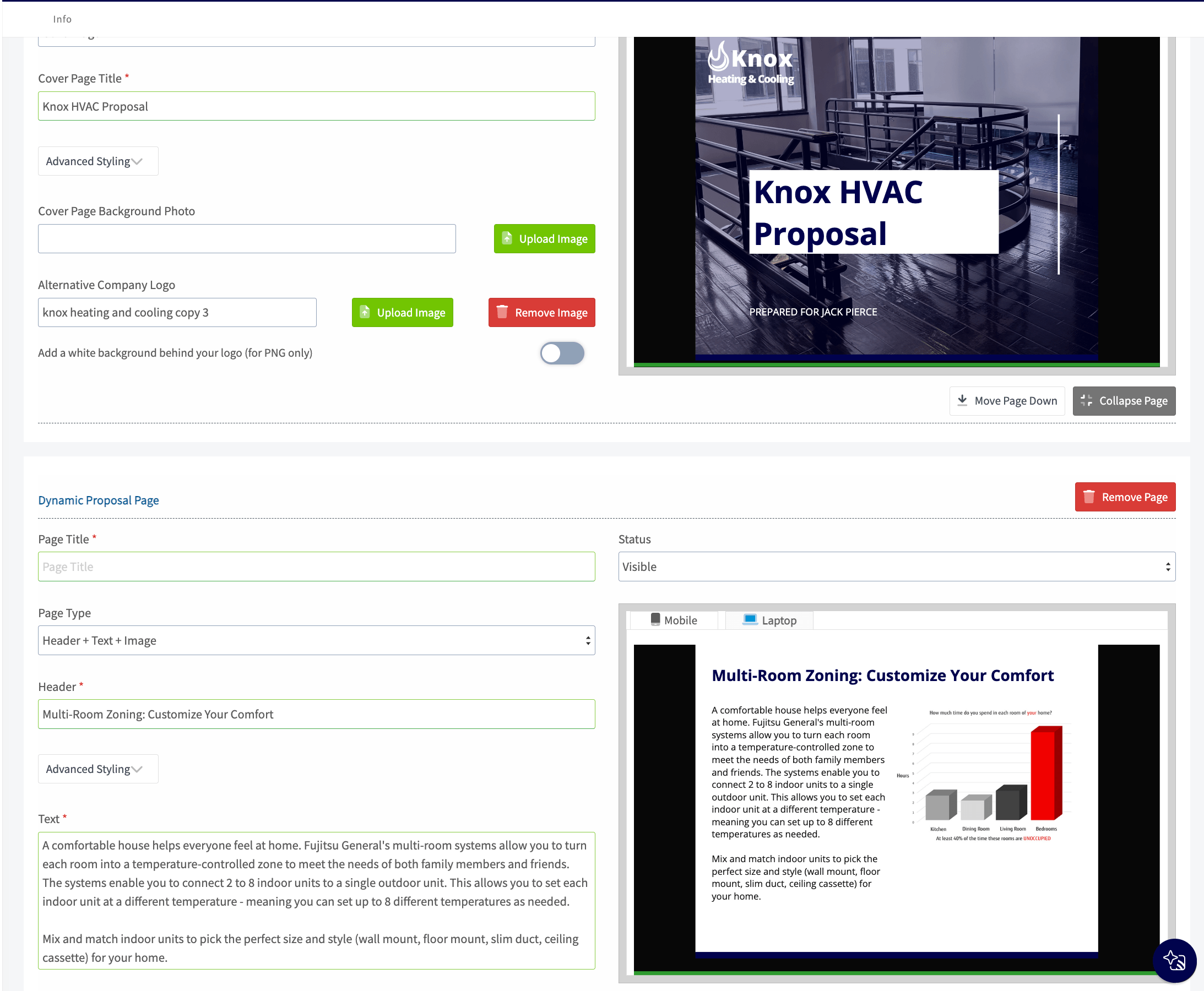
FieldPulse is the most balanced electrical proposal software option here for electrical contractors moving between small service calls and more involved residential work. The proposal can explain the project in detail while remaining connected to the customer and job records.
Key features in our platform review included native branded presentations, reusable templates, estimate variants, optional items, and bundled services. For an electrical contractor, I would use that flexibility to present a clearly defined panel replacement alongside separately assessed additional work, or to explain the proposed phases of a home rewiring project.
The useful distinction is between a complete alternative and an extra. A customer selecting one installation approach should not need to assemble it from a confusing list of components. FieldPulse’s different option formats give the contractor room to structure that decision.
There is also a concrete electrical purchasing connection. FieldPulse documents a City Electric Supply integration that brings an account’s current CES pricing into estimates, invoices, and purchase orders. Catalog items can be added inside the app, and submitted purchase orders appear in the CES account. An active supplier account and support-assisted setup are required.
That connection is worth testing against your preferred suppliers if your team regularly transfers material prices from supplier quotes. Check the products you actually buy and how price changes affect a draft estimate versus an offer already sent to a customer. If you use separate electrical estimating software, check how reviewed material costs reach the proposal without manual re-entry.
Where I would be cautious: Dynamic Proposals belongs to the Sales Suite add-on. Include the pricebook, proposal tools, required forms, and all users in the sales quote. The base subscription does not represent the complete setup discussed here.
BuildOps: Best Fit for Commercial Projects and Electrical Bids
BuildOps moves up my shortlist for commercial electrical contractors when the electrical proposal is the start of a substantial project. A tenant improvement, lighting retrofit, or phased installation creates commitments around labor, material purchases, access, scheduling, and subsequent changes.
Its quoting feature documentation describes pricebook-based estimates, quote versions, internal approvals, supporting media, and conversion of approved quotes into scheduled work or projects. Those capabilities help internal teams work from the same accepted scope on multi-phase projects.
For example, a revised lighting specification may change the equipment cost, installation labor, and delivery assumptions. I would want the proposal revision to be clearly identifiable and the project team to receive the version the customer actually accepted.
BuildOps also positions its electrical contractor platform around commercial operations. Our wider review found construction-document management, change-order control, committed costs, project finances, and crew planning. That depth matters when managing the consequences of an electrical bid through project completion. Ask how job costing feeds financial reporting, and what posting delays affect any claimed real-time job costing.
Where I would be cautious: A strong commercial operations platform is not automatically the most flexible proposal software. Ask to see the exact bid format you send to general contractors, including attachments and qualifications. If you already use specialist electrical estimating software, demonstrate the transfer of its reviewed estimate into the proposal and project workflow before choosing a replacement. Electrical estimators should check whether labor units and cost codes retain their meaning after transfer.
ServiceTitan: Best for Consistent Electrical Sales Across a Large Team

ServiceTitan makes the most sense when electrical proposals need company-wide structure. A large service business may want technicians to use approved prices, follow a consistent presentation, and record why an opportunity was won or lost.
Its electrical proposal software supports customer-facing scope descriptions, photos, services, costs, and multiple options. The wider platform connects estimating with dispatch, billing, customer records, and reporting.
The operational strength is repeatability. Electrical contractors could prepare approved offers for common installations, then let technicians adapt the site-specific details. Managers can focus on consistent electrical estimates across the team, rather than rebuilding every proposal individually.
The setup is significant, however. ServiceTitan’s proposal-template documentation describes creating estimate templates in the office and grouping them into proposals for mobile presentation. Pricebook maintenance and technician permissions are part of making that process work. If electrical estimating software supplies the cost build-up, test how approved amounts and scope reach the customer-facing options.
For multi-trade contractors with someone responsible for those systems, the control over proposal generation can justify the effort. For an owner-operator fitting administration between service calls, it may be too much infrastructure for the immediate problem.
Where I would be cautious: Evaluate the native option-selling workflow separately from any longer branded presentation you need. Our original review assessed a more extensive document-building experience through Airship, a separate integration. Ask the vendor to demonstrate your required output and identify every product needed to produce it.
Jobber: Best for Simple Quotes From a Small Electrical Shop

Jobber is the option I would try first when the goal is to stop sending plain, inconsistent quotes for everyday electrical work. Its appeal for smaller contractors is manageable proposal software with enough presentation detail to explain the job.
For electrical contractors handling lighting installations, fixture replacements, and other well-defined work, Advanced Quote Customization adds introductions, images, and attachments around the pricing. A customer can see the fixture selection or proposed location instead of relying on a short line-item description.
Quote templates can be prepared for recurring job types. The office creates them on the web, and staff can use them in the mobile app. This suits residential shops that want professional proposals with common wording for installation responsibilities. Where electrical estimating software supplies the numbers, test whether the template preserves the reviewed scope and price.
Jobber also supports optional line items. These can work well for genuinely independent additions, such as another separately scoped lighting area. For two mutually exclusive installation choices, check that the customer understands how to select the intended option.
Where I would be cautious: Grow and Plus provide advanced customization, with the complete editing experience on the web. Jobber documents some iOS customization, but mobile access does not mean every presentation feature is available in the app. I would also test a detailed electrical bid before assuming that a workflow suited to residential quotes can accommodate all of its qualifications and revisions.
Housecall Pro: A Practical Choice for Standardized Residential Offers
Housecall Pro is worth considering when your electrical proposals use a familiar, repeatable proposal format. The sales process might involve explaining suitable installation choices, showing images, and using digital approvals during the visit.
Its Sales Proposal templates provide descriptions and option images in a structured presentation. That can suit a company selling repeatable lighting packages or clearly defined electrical improvements, provided every offered option reflects the assessed job requirements.
The vendor also publishes an Electrical Package. Its feature table includes the Sales Proposal Tool and Membership Plans with Essentials and MAX. Pipeline is included with MAX, while purchase orders appear across the listed tiers.
For electrical contractors, those package details matter more than a generic starting price. Ask to compare the electrical package you would actually buy, with the correct number of users and the key features your technicians need.
Where I would be cautious: Our broader testing found desktop-to-mobile differences in estimating tools, including cost and profit calculations. Include any handoff from separate electrical estimating software in the demo. For a proposal prepared at the property, check what the electrician can edit, what must be completed by the office, and how the final document displays assumptions. A structured sales presentation may need extra consideration when the job has extensive access conditions or multiple phases.
QuoteIQ: Rich Presentations and Mobile AI, With Reliability Reservations
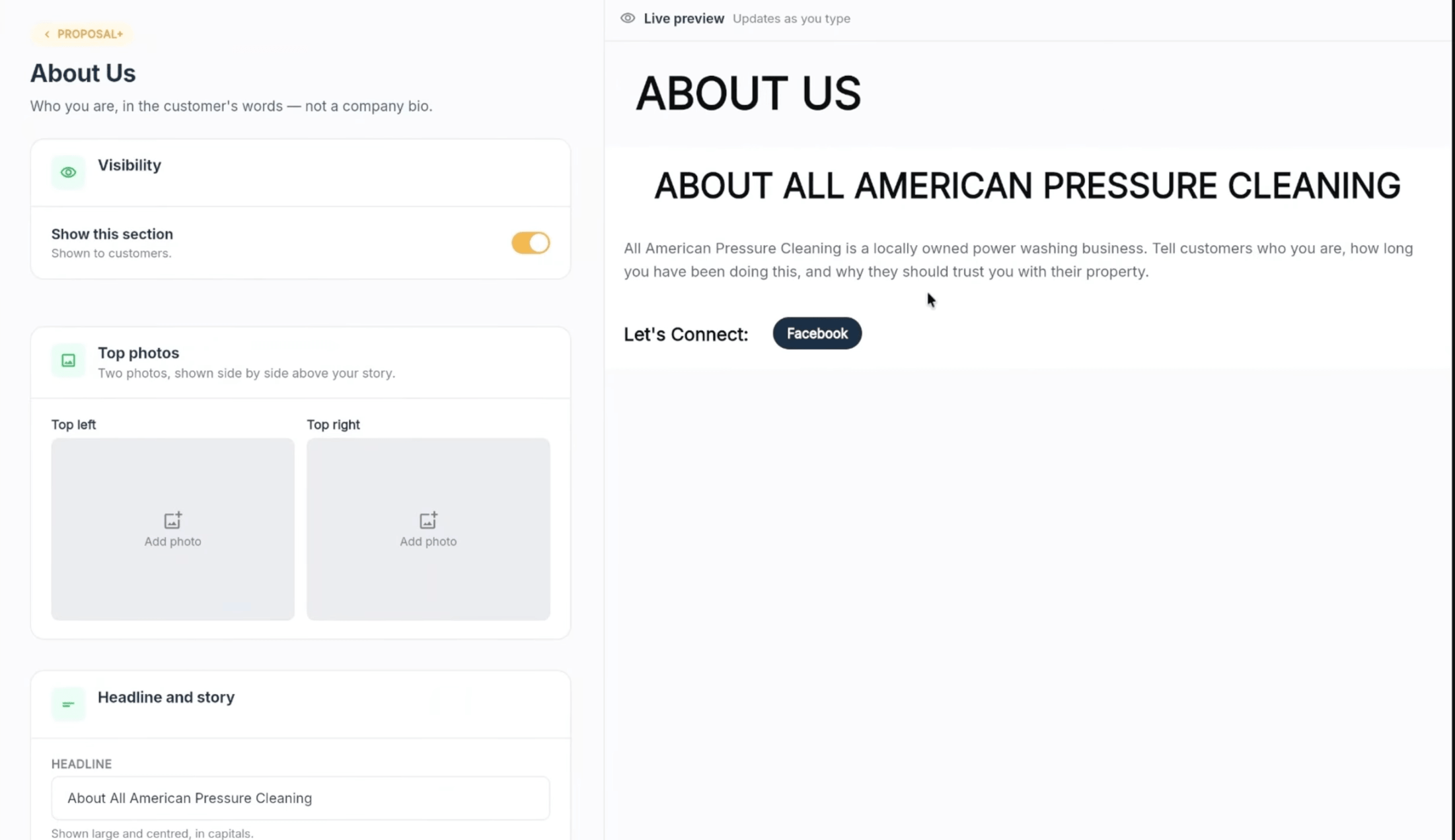
QuoteIQ provides substantial proposal software capabilities for a small team. Its branded proposal feature combines service descriptions, photos, documents, reviews, pricing, and customer signing.
An electrical contractor could use those sections to describe a proposed improvement, show existing conditions, and attach supporting product information. AI-assisted drafting may help turn an electrician’s notes into readable prose, but accurate proposals still require the scope to match the assessment and estimate.
Our October platform tests found usable mobile AI, alongside routine loading delays of 6–10 seconds and errors in offline estimating. Previously loaded estimates also became unavailable in the tested offline workflow. These observations concern the account and version reviewed; they are a reason to test field performance with your own devices and connectivity.
For electrical proposals, I would pay particular attention to retained photos, saved descriptions, and recovery after losing a connection. A technician should not have to reconstruct the assessment while the customer waits. Cloud-based access alone does not establish offline reliability; test the entire workflow through a lost connection.
Where I would be cautious: Branded proposals use 100 IQ Credits per estimate on Essentials, Beginner, and Pro, charged when the proposal is first attached. Elite and Max include them without that credit charge. Also review AI output for invented equipment specifications, unsupported capacity claims, and work that was never included in the estimate. A polished document does not validate numbers from electrical estimating software or replace an electrician’s assessment.
FieldEdge: Most Relevant for Flat-Rate Electrical Service Pricing
FieldEdge’s strongest reason to make this shortlist is repair-pricing consistency. Its Flat Rate product supports standardized service pricing, and the company provides electrical pricebook material.
For a company handling repeated service work, that can be useful groundwork for customer quotes. A managed catalog is worth considering if maintaining repair descriptions and prices has become a burden for the office.
The catalog still needs to fit the way your electricians work. Use job history to review representative tasks, then check whether you can adjust their wording and cost assumptions without making routine estimates harder to maintain. When comparing electrical estimating software, distinguish repair-price maintenance from the proposal’s ability to explain a custom scope.
Our platform review found less flexibility in proposal presentation than the leading choices. Advanced replacement presentations also involved a separate Proposal Pro workflow. A demonstration centered on another trade’s equipment replacements does not establish its suitability for a detailed electrical installation bid.
Where I would be cautious: I would not choose FieldEdge primarily for custom rewiring or commercial project documents without seeing those proposals built. Ask the vendor to show how a standard repair item expands into a larger scope, how the customer sees exclusions, and where staff revise the offer before acceptance.
Scope Checks for Better Proposals and Accurate Estimates
These evaluation scenarios show electrical contractors what to check in proposal software; they do not claim that each platform supplies prebuilt templates or automatic technical checks. Better proposals preserve the reasoning behind the estimate as well as its total.
Panel Replacement and Service Upgrades Need Distinct Descriptions
An offer labeled simply “panel upgrade” leaves too much unexplained. The customer needs to know what equipment and work the price covers, which existing systems remain in place, and whether the project includes a change to the electrical service.
Use the proposal to document the assessed scope and any dependencies on utility coordination, access, or inspection arrangements. If an item remains unconfirmed, make that condition visible rather than allowing the template to imply it is settled.
When testing software, revise one part of the scope and inspect the customer document. Does the change appear in the description as well as the price? Does an older attachment still describe the previous offer? Those are useful checks for keeping field crews aligned with the accepted offer.
EV-Charger Proposals Should Separate Equipment From Installation Conditions
For these electrical projects, the charger model is only one part of the offer. The proposal should identify who provides it, the intended location, the installation work included, and the assumptions behind the proposed route and connection.
Where the site assessment identifies additional electrical work, show how that relates to the installation. Avoid a template that presents every property as the same job or assumes that selecting a charger resolves the property’s capacity questions.
Useful software lets you record site photos, explain the assessed approach, and revise the offer when a location or equipment choice changes. It should also make it clear which price the customer accepted and whether any further assessment remains outside that approval.
Rewiring Prices Depend on Access, Occupancy, and Finishing Responsibilities
A rewiring proposal needs to identify the areas covered and the conditions under which the work is priced. An occupied house with finished surfaces presents different coordination needs from an accessible renovation site.
Document the expected access, work stages, service interruptions, and responsibility for repairing affected surfaces. If the customer expects decoration or finishing work, the proposal should establish whether it is included and who will perform it.
For software selection, test whether reusable wording remains easy to review at the individual-property level. A long template is not useful if the estimator cannot quickly spot assumptions carried over from another job. The estimating process should adjust labor units to reflect real labor conditions, then carry relevant access assumptions into the offer.
Lighting Proposals Need Clear Fixture and Control Responsibilities
Lighting work can involve contractor-supplied fixtures, customer-supplied products, selections that have not been finalized, or separate design responsibilities. Those arrangements belong in the offer.
Specify the agreed locations or referenced schedule, identify who supplies the equipment, and explain any selection allowance. Where controls or commissioning form part of the scope, describe what is included rather than relying on a broad phrase such as “complete lighting installation.”
A good demonstration tests the integration capabilities with an actual fixture change. Ask the vendor to replace one selection and show how the product description, supporting image, price, and accepted revision stay aligned.
Commercial Electrical Contractors: A Traceable Bid Basis for Commercial Work
For an electrical bid prepared from project documents, record the digital plans, specification references, and revisions used to price the work. The recipient should be able to distinguish the current offer from a previous issue.
The software should help organize the proposal’s attachments and conditions so the project team can identify what was accepted. During a demo, use a revised layout or equipment schedule and examine the transfer into the job record.
Also test the customer-facing export. Your estimating detail may be extensive, but the general contractor needs an intelligible offer that fits the requested submission format. On large-scale projects involving multiple trades, show who owns each interface so competitive bids are compared on the same scope. Internal labor rates and profit margins should appear only when you intend to disclose them.
Keep Allowances, Alternatives, and Exclusions Separate
These terms communicate different things. Proposal software should help the recipient understand how each one affects the price. This remains essential when electrical estimating software calculates an alternative: a changed total must have a matching scope description.
| Item | Meaning in the offer | Electrical example |
|---|---|---|
| Base scope | The work covered by the stated starting price | The defined lighting installation using the specified fixtures |
| Allowance | An amount carried for an item that is not fully selected or resolved | A stated supply allowance for decorative fixtures awaiting selection |
| Alternative | A separately priced substitution or change to the base offer | A different assessed fixture package, with its price adjustment identified |
| Optional addition | Extra work the customer can choose independently | A separately scoped lighting area outside the original project |
| Exclusion | Work or cost outside the offer | Decoration after access work, where another party is responsible |
| Assumption or qualification | A condition on which the offer depends | Pricing based on the agreed access hours and identified drawing revision |
For allowances, explain what happens when the final selection changes the amount. For alternatives, show whether the figure is a complete replacement price or an adjustment to the base bid. The customer should not have to infer that from the total.
Good/Better/Best presentations can be useful for suitable alternatives, but they should not turn work required for the agreed installation into an optional upgrade. Keep the necessary scope intact in every option you offer.
What Does Electrical Proposal Software Cost?
The relevant price is the cost of the tools and users needed to complete your proposal process. Public subscription prices and custom sales quotes are not directly comparable without that detail.
| Platform | Current pricing basis | Detail to confirm before buying |
|---|---|---|
| FieldPulse | Custom seat-based pricing | Sales Suite, any required forms, supplier setup, and field and office users |
| BuildOps | Custom pricing based on users and requirements | Project modules, accounting connection, and implementation scope |
| ServiceTitan | Custom per-technician pricing | Implementation and the specific sales, reporting, and presentation products included |
| Jobber | Grow regularly costs $199/month for one user without a commitment, or $149/month equivalent billed annually | Larger-team packages and any separately charged sales features; figures exclude temporary offers |
| Housecall Pro | Request pricing for the Electrical Package and required seats | Essentials or MAX for the bundled Sales Proposal Tool |
| QuoteIQ | New-subscription pricing: Pro $199.99/month for four users; Elite $299.99/month for 10 users | Credit usage, additional users, and the features needed beyond proposal creation |
| FieldEdge | Request a quote against the current plan comparison | Flat-rate pricing, presentation products, users, and setup charges |
QuoteIQ’s figures reflect its October 2026 pricing update. Existing subscribers may retain an earlier rate while remaining on their eligible plan.
Include the time required to maintain the system. Electrical item descriptions, supplier costs, labor assumptions, and template wording need an owner. A proposal builder saves less time when every quote still requires staff to repair an outdated catalog. Budget separately for electrical estimating software, material libraries, accounting software connections, training, and software updates where required. Ask the support team who maintains each connection and whether cloud-based access changes the license cost.
A Demo Checklist for Electrical Contractors
Bring a completed job and its estimate to the demonstration. If electrical estimating software feeds the proposal, bring that output too. Ask the vendor to recreate the offer with your wording, materials, and customer information. Then deliberately change something the customer might change. Use this pilot project to test the key features against your current manual methods.
If you use cloud-based takeoff, test drawing revisions, quantity exports, and access permissions alongside your proposal tools. Those checks belong in the trial even when takeoff and estimating software are separate purchases.
| Demonstration | What you want to establish |
|---|---|
| Move an EV charger’s proposed location | The scope, site assumptions, and price can be revised together |
| Change a fixture selection | Product details, attachments, and totals remain consistent |
| Add an alternative to an electrical bid | The recipient can distinguish the base price from the adjustment |
| Update a supplier cost | Staff can see what changes in draft, sent, and accepted proposals |
| Revise the offer after sending it | Approval tracking identifies the current version and the approval still required |
| Approve one installation option | The job record receives only the selected scope and relevant supporting information |
| Add work after acceptance | The original commitment and later authorization remain identifiable |
| Open the customer document on a phone | Descriptions, choices, attachments, and the final total are readable |
Do these checks using the plan you would purchase and the devices your team uses. Compare the estimating software’s labor units with recorded labor hours to assess whether it supports more accurate estimates and realistic profit margins. A demonstration built from a vendor’s best-case template does not establish how much work your estimator will face each day. For complex projects, trace approved scope into job costing and accounting software; winning work and delivering profitable projects require both handoffs to be clear.
How These Recommendations Were Developed
Testing at a glance
- Review period
- October 2026
- Devices
- Desktop and iPhone
- Evidence
- Seven-platform desktop and iPhone review observations, with electrical product details and plan information supplied by current vendor documentation.
- Focus
- Presenting electrical scope, controlling prices and customer choices, reviewing field usability, and transferring approved work into operations.
The hands-on observations come from Tools in the Wild’s October 2026 desktop and iPhone review of the seven field service platforms. Current vendor documentation supplies additional electrical-specific product details and published plan information.
I placed the most weight on the core features of scope presentation, pricing control, appropriate customer choices, field usability, and transfer of approved work into operations. Separate applications and paid modules are identified where they affect the purchasing decision. Our editorial methodology explains the broader review approach.
Electrical Proposal Software FAQs
Which software would you choose for a solo electrician?
I would start with Jobber for a straightforward quote-and-job workflow, then compare FieldPulse if more detailed presentations or supplier-connected pricing are important. The cheapest advertised plan is only useful if it includes the tools you need to produce professional proposals. Build a real quote during the trial and compare the total cost of that configuration.
Can I use the same template for a homeowner and a general contractor?
You can reuse verified descriptions and company information, but the finished offers should suit the recipient. A homeowner may need plain-language explanations and clear installation choices. A general contractor may expect bid references, acknowledged revisions, allowances, alternatives, and a specified submission format. Test both outputs if your business serves both markets.
Does a proposal builder perform electrical design or load calculations?
Do not assume it does. The proposal features reviewed here concern pricing, presentation, and workflow. Electrical design and capacity assessment need their own suitable process and tools. A document containing equipment specifications or code-related wording is not evidence that the software has validated the installation.
Can electrical proposal software use current supplier prices?
Some products have supplier connections. FieldPulse, for example, documents account-specific City Electric Supply pricing inside estimates and purchasing. Check your actual supplier and products rather than assuming a generic pricebook is a live catalog. Also establish how a cost update affects an offer already sent or accepted.
How should I handle a customer changing the job after approval?
Use a workflow that records the additional or revised scope, its price, and the customer’s authorization while preserving the original accepted offer. Depending on the platform, that may be a change order or a separate estimate linked to the job. Ask to see the full history and the final information passed to the crew.
How do I choose the best electrical estimating software for my proposal workflow?
The right system for your business should generate estimates from quantities, current costs, and realistic productivity assumptions, then preserve the approved scope in the customer offer. Accurate estimates depend on maintained inputs; presentation quality alone does not establish accuracy.
Where do Electrical Bid Manager and bidding software fit?
Electrical Bid Manager is built specifically for electrical estimating. Its official product documentation describes an electrical item database, pre-built assemblies, material pricing data, and digital takeoff connections. These bidding tools address the cost build-up before an offer is presented; they are not evidence of a tested integration with the seven platforms above.
If you already rely on bidding software, demonstrate how its reviewed estimate becomes a proposal without losing qualifications. For electrical contractors, the bidding process should support profitable bids by keeping exclusions and cost assumptions visible to reviewers. We have not ranked this specialist product against the seven field service platforms in hands-on testing.
What if my company also sells heating and cooling installations?
Multi-trade contractors should assess the electrical department against its own job types, supplier needs, and scope requirements. When sharing one platform, test department-specific permissions and templates before standardizing proposal generation. For heating and cooling equipment sales, our HVAC proposal software comparison examines the relevant presentation and operating workflows.

Olivia Evans
Olivia has more than 10 years of experience researching field-service software for HVAC and other service businesses and improving their marketing and operations. She conducts hands-on workflow tests, documents findings with screenshots and notes, and checks product claims against official vendor documentation.
Author profile →How we test →